

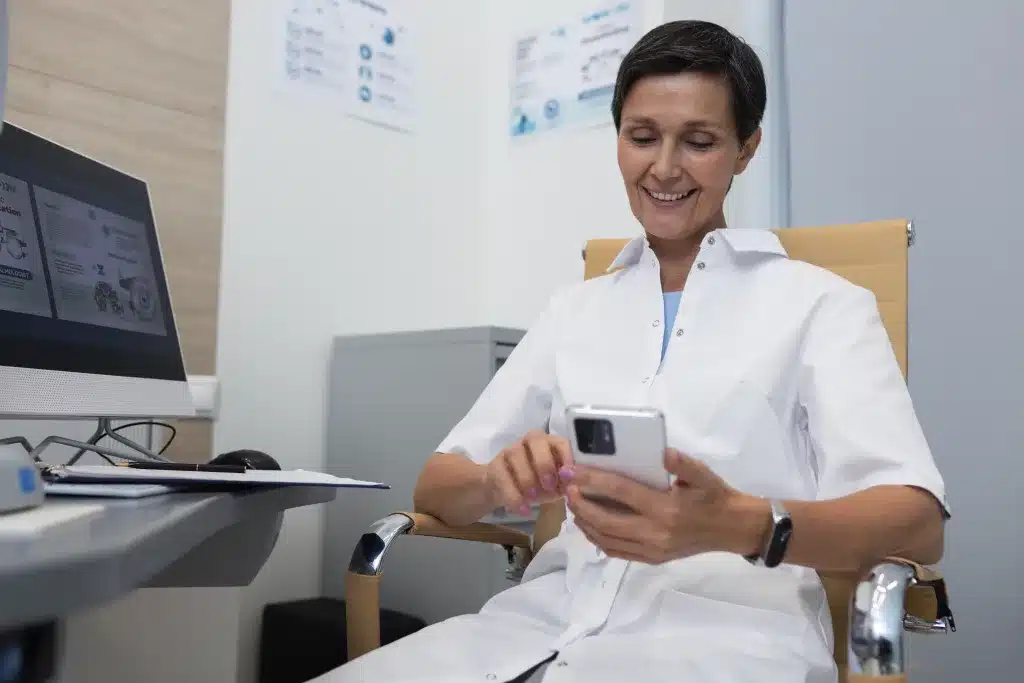
How Secure Patient Texting Cut Patient Calls by 60% and Improved Staff Workflow in 14 Days

Secure Patient Texting

Phone calls remain one of the most underestimated workflow bottlenecks in healthcare. As patient volume grows, front desks and clinical teams spend more time answering repetitive calls, returning missed messages, and managing voicemail backlogs. Hold times frustrate patients, while constant interruptions pull staff away from higher-value work.

This is where a HIPAA-secure messaging platform becomes more than just a communication tool. When implemented as a workflow system via a structured medical texting service, secure patient texting can dramatically reduce call volume. In one deployment, practices saw a 60% reduction in inbound calls within just 14 days by shifting routine communication to text.

Why Phone-First Communication Breaks Down

Traditional phone-based workflows are built on one-to-one interactions. One staff member can only handle one call at a time, which caps throughput and creates bottlenecks during peak hours. Missed calls trigger callback loops that compound delays rather than resolve them.

Over time, staff are forced into a reactive mode, responding to interruptions instead of managing tasks proactively. This is why patient messaging through a HIPAA-secure messaging platform has become a critical alternative. When paired with encrypted SMS for patient communication, practices can scale communication without scaling headcount, allowing teams to handle more patient interactions with less friction.

Secure Patient Texting as a Workflow Engine

Doctoc is a HIPAA-secure messaging platform designed specifically for healthcare workflows, not consumer-style chat. Instead of relying on phones as the primary intake channel, practices use a text-first approach powered by a medical texting service that routes messages into a shared, centralized inbox.

This model enables true two-way communication without forcing staff into constant real-time interruptions. Multiple conversations can be managed simultaneously, responses can be prioritized, and documentation stays consistent. The platform supports encrypted SMS for patient communication, ensuring sensitive information is protected while still remaining accessible to authorized staff.

Because it is purpose-built for digital health messaging, voicemail and manual call triage are eliminated. Patients receive faster responses, and staff regain control over their workflow.

How Calls Dropped by 60% in 14 Days

The reduction in phone calls did not happen by chance. It was driven by a structured rollout that replaced reactive phone handling with automated medical texting service workflows.

Step 1: Instant acknowledgment

Incoming messages receive an immediate auto-reply using automated patient outreach via secure text, confirming receipt and setting expectations.

Step 2: Intelligent routing

Messages are routed based on topic and urgency using encrypted messaging, so the right staff member sees the message without unnecessary handoffs.

Step 3: Appointment management via text

Scheduling questions, confirmations, and simple changes are handled through encrypted SMS for patient communication, eliminating the most common inbound call types.

Step 4: Proactive follow-ups

Routine follow-ups and check-ins are sent automatically using automated patient outreach via secure text, reducing inbound “status check” calls.

Step 5: Escalation only when needed

Only complex or urgent cases escalate to phone calls. Everything else flows through the medical texting service through automated patient outreach via secure text as a call-deflection layer.

Within two weeks, inbound call volume dropped by 60%, freeing staff to focus on higher-priority tasks.

What Changed for Staff

The operational impact on staff was immediate. Fewer interruptions meant fewer context switches throughout the day. Message ownership became clearer, reducing duplicate work and internal confusion.

Because patient outreach via secure SMS replaced many outbound calls, response times improved without increasing workload. Staff could control pacing, respond between tasks, and prioritize based on urgency rather than being pulled into constant phone conversations.

The HIPAA-secure messaging platform shifted communication from reactive to intentional, creating a calmer, more sustainable workflow.

Compliance, Security, and Integration

Security was not compromised to achieve efficiency. The system relies on encrypted SMS for patient communication, protecting patient data while maintaining ease of use. Patient messaging is fully auditable and designed for healthcare compliance.

With messaging integration with EHR, conversations can be aligned with patient records without forcing staff to jump between systems. The result is HIPAA compliance without workflow friction, delivered through a scalable medical texting service.

Healthcare organizations exploring secure patient communication can learn more about best practices from industry leaders like the Healthcare Information and Management Systems Society (HIMSS), which outlines standards for patient engagement and secure messaging for HIPAA-secure messaging platforms on its website.

Additional guidance on secure patient communication and health IT standards is available through the Office of the National Coordinator for Health Information Technology.

Reduce Phone Volume Without Adding Staff

Administrative overload does not have to be the cost of growth. By shifting routine communication to secure patient medical texting services, practices can reduce call volume, protect staff time, and improve patient experience without any hiring additional staff. Doctoc’s secure patient medical texting service solution through their HIPAA-secure messaging platform transforms communication from a bottleneck into a workflow advantage, delivering measurable results in days, not months.


How Secure Patient Texting Cut Patient Calls by 60% and Improved Staff Workflow in 14 Days

Secure Patient Texting

Table of Content

Phone calls remain one of the most underestimated workflow bottlenecks in healthcare. As patient volume grows, front desks and clinical teams spend more time answering repetitive calls, returning missed messages, and managing voicemail backlogs. Hold times frustrate patients, while constant interruptions pull staff away from higher-value work.

This is where a HIPAA-secure messaging platform becomes more than just a communication tool. When implemented as a workflow system via a structured medical texting service, secure patient texting can dramatically reduce call volume. In one deployment, practices saw a 60% reduction in inbound calls within just 14 days by shifting routine communication to text.

Why Phone-First Communication Breaks Down

Traditional phone-based workflows are built on one-to-one interactions. One staff member can only handle one call at a time, which caps throughput and creates bottlenecks during peak hours. Missed calls trigger callback loops that compound delays rather than resolve them.

Over time, staff are forced into a reactive mode, responding to interruptions instead of managing tasks proactively. This is why patient messaging through a HIPAA-secure messaging platform has become a critical alternative. When paired with encrypted SMS for patient communication, practices can scale communication without scaling headcount, allowing teams to handle more patient interactions with less friction.

Secure Patient Texting as a Workflow Engine

Doctoc is a HIPAA-secure messaging platform designed specifically for healthcare workflows, not consumer-style chat. Instead of relying on phones as the primary intake channel, practices use a text-first approach powered by a medical texting service that routes messages into a shared, centralized inbox.

This model enables true two-way communication without forcing staff into constant real-time interruptions. Multiple conversations can be managed simultaneously, responses can be prioritized, and documentation stays consistent. The platform supports encrypted SMS for patient communication, ensuring sensitive information is protected while still remaining accessible to authorized staff.

Because it is purpose-built for digital health messaging, voicemail and manual call triage are eliminated. Patients receive faster responses, and staff regain control over their workflow.

How Calls Dropped by 60% in 14 Days

The reduction in phone calls did not happen by chance. It was driven by a structured rollout that replaced reactive phone handling with automated medical texting service workflows.

Step 1: Instant acknowledgment

Incoming messages receive an immediate auto-reply using automated patient outreach via secure text, confirming receipt and setting expectations.

Step 2: Intelligent routing

Messages are routed based on topic and urgency using encrypted messaging, so the right staff member sees the message without unnecessary handoffs.

Step 3: Appointment management via text

Scheduling questions, confirmations, and simple changes are handled through encrypted SMS for patient communication, eliminating the most common inbound call types.

Step 4: Proactive follow-ups

Routine follow-ups and check-ins are sent automatically using automated patient outreach via secure text, reducing inbound “status check” calls.

Step 5: Escalation only when needed

Only complex or urgent cases escalate to phone calls. Everything else flows through the medical texting service through automated patient outreach via secure text as a call-deflection layer.

Within two weeks, inbound call volume dropped by 60%, freeing staff to focus on higher-priority tasks.

What Changed for Staff

The operational impact on staff was immediate. Fewer interruptions meant fewer context switches throughout the day. Message ownership became clearer, reducing duplicate work and internal confusion.

Because patient outreach via secure SMS replaced many outbound calls, response times improved without increasing workload. Staff could control pacing, respond between tasks, and prioritize based on urgency rather than being pulled into constant phone conversations.

The HIPAA-secure messaging platform shifted communication from reactive to intentional, creating a calmer, more sustainable workflow.

Compliance, Security, and Integration

Security was not compromised to achieve efficiency. The system relies on encrypted SMS for patient communication, protecting patient data while maintaining ease of use. Patient messaging is fully auditable and designed for healthcare compliance.

With messaging integration with EHR, conversations can be aligned with patient records without forcing staff to jump between systems. The result is HIPAA compliance without workflow friction, delivered through a scalable medical texting service.

Healthcare organizations exploring secure patient communication can learn more about best practices from industry leaders like the Healthcare Information and Management Systems Society (HIMSS), which outlines standards for patient engagement and secure messaging for HIPAA-secure messaging platforms on its website.

Additional guidance on secure patient communication and health IT standards is available through the Office of the National Coordinator for Health Information Technology.

Reduce Phone Volume Without Adding Staff

Administrative overload does not have to be the cost of growth. By shifting routine communication to secure patient medical texting services, practices can reduce call volume, protect staff time, and improve patient experience without any hiring additional staff. Doctoc’s secure patient medical texting service solution through their HIPAA-secure messaging platform transforms communication from a bottleneck into a workflow advantage, delivering measurable results in days, not months.

Read our latest articles